The case
In January 2022, John O'Keefe, a Boston police officer, was found unresponsive in the snow outside a fellow officer's home in Canton, Massachusetts, after a night of drinking. He later died. Massachusetts prosecutors charged Karen Read, his girlfriend and a former Fidelity Investments equities analyst and Bentley University finance professor, with second-degree murder, manslaughter while operating under the influence, and leaving the scene of a collision resulting in death.
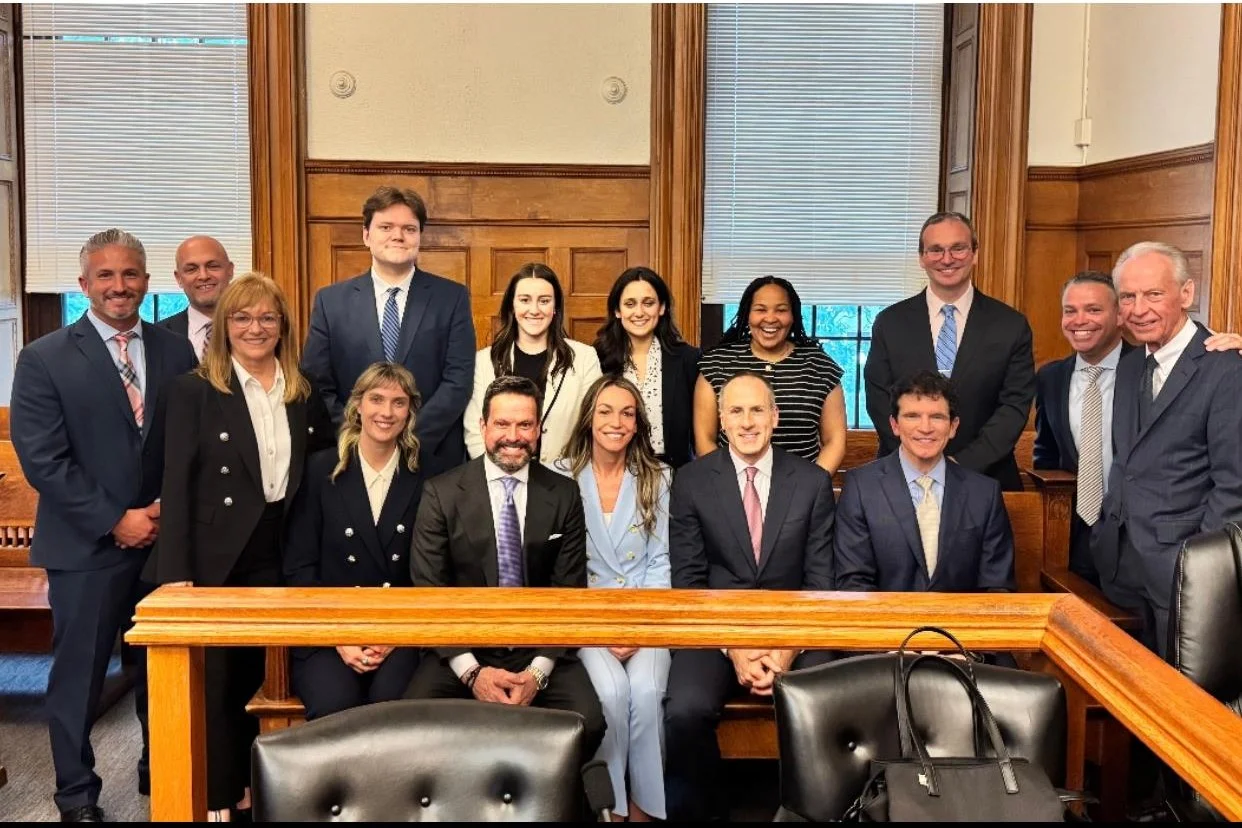
The defense, led by Alan Jackson at Werksman Jackson & Quinn LLP, argued a different story. They told the jury Read's vehicle never struck O'Keefe. They argued he was attacked inside the home, then placed outside in the snow, and that Read was being framed by a group that included law enforcement. The case became one of the most-watched criminal trials in the country, drawing sustained coverage from NPR, CNN, ABC News, CBS Boston, Fox News, Vanity Fair, and the Boston Globe, and generating protest movements on both sides of the courthouse.
The fundraising challenge
By the time her second trial began, Karen Read owed her attorneys more than $5 million in deferred legal fees. She had sold her home for $810,000, drained her retirement accounts, and lost both of her jobs. Traditional self-funding was exhausted.
This was a case where platform stability was not a nice-to-have. It was operational. A fundraising platform hosting the Read defense fund had to be willing to stand behind it through two years of hostile press, policy-complaint campaigns, shifting public opinion, and active legal pressure. Most crowdfunding platforms are structurally unwilling or unable to make that commitment. A removed fund mid-trial would have been catastrophic for the defense's cash flow.
Timeline
- January 29, 2022 John O'Keefe found unresponsive in Canton, MA. Karen Read charged.
- May 26, 2023 Justice for Karen Read Legal Defense Fund launches on PayIt2, organized by Werksman Jackson & Quinn LLP as organizer of record.
- April 2024 First trial begins at Norfolk Superior Court, Dedham, Massachusetts.
- July 2024 First trial ends in a mistrial with a hung jury. Multiple jurors later confirm they had agreed Read was not guilty on the most serious charges.
- March 2025 Massachusetts State Police dishonorably discharge Michael Proctor, the lead investigator, citing unsatisfactory performance and on-duty alcohol consumption. Defense files Supreme Court double-jeopardy petitions.
- April 1, 2025 Jury selection begins for the second trial.
- June 13, 2025 Jury deliberations begin. Fund surpasses $1 million from more than 13,000 donors.
- June 18, 2025 Jury acquits Karen Read on second-degree murder, manslaughter, and leaving-the-scene charges. She is convicted only on an OUI count and receives one year of probation.
- November 23, 2025 Companion Karen Read Civil Defense and Accountability Fund launches on PayIt2 to support civil proceedings.
How the campaign ran
The fund was organized under Werksman Jackson & Quinn LLP's PayIt2 account, with the law firm as organizer of record. Donors saw the firm's name, which gave the campaign the credibility of direct attorney involvement rather than a third-party donor page. Funds routed to accounts the firm controlled, which simplified trust-account reconciliation and made reporting clean.
Several choices made the campaign durable:
Firm-organized page. Unlike family-run or donor-run campaigns, the law firm as organizer signaled to donors that their contributions were flowing directly to the defense, not through intermediaries. Donor trust translated into higher average gifts and longer-tail engagement.
Parallel campaign structure. When the criminal case was followed by civil proceedings, the firm launched a second campaign on the same platform, under the same firm account, without either fund cannibalizing the other. The civil defense fund has raised over $70,000 additional and continues to grow.
Platform stability through controversy. The campaign remained live across two trials, a mistrial, multiple appeals, a Supreme Court double-jeopardy petition, and approximately 25 months of continuous high-profile media coverage with strong opinions on both sides. The platform was not removed, throttled, or restricted at any point.
Results
This case was corrupted from the start. It was corrupted by biases and conflicts and personal loyalties that you heard about, and most fatally, it was corrupted by a lead investigator whose misconduct infected every single part of this case from the top to the bottom. Alan Jackson, in closing arguments at the second trial (as reported in public press coverage)
What this means for other attorneys
Retainer-level defense fundraising is becoming standard. The Read case supplemented a multi-million-dollar deferred fee balance that private financing alone could not cover. For high-profile cases where the defendant cannot self-fund, crowdfunding is no longer the exception.
Platform stability is the single most important feature. Any platform whose terms of service can be weaponized by opposing counsel, press complaints, or activist pressure is a single point of failure for the defense's cash flow. A removed fund in the middle of a trial is operationally catastrophic.
Firm-branded organizer pages outperform fan-organized ones. Donors give more, and more consistently, when they know the campaign is run by the defense team directly. This is true across size, geography, and case type.
Companion funds let firms run criminal and civil tracks independently. The Read case validated running separate campaigns for criminal defense and subsequent civil proceedings under one firm organizer, without cannibalization.
Long-horizon campaigns need purpose-built infrastructure. A 25-month active campaign has fundamentally different operational requirements than a one-week fundraiser. Receipt integrity, donor communications, platform-stakeholder relationships, and policy stability all have to hold up through the full arc of the case.